
Our Founder
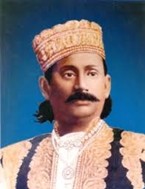
Maharaja Krushna Chandra Bhanj Deo (often spelled as Krishna Chandra Bhanja Deo) was a significant historical figure associated with the princely state of Mayurbhanj, located in present-day Odisha, India. He ruled Mayurbhanj from 1868 until his death on May 29, 1882, and is widely regarded as one of the key architects of modern Odisha, alongside his son, Maharaja Sriram Chandra Bhanj Deo.
Born in 1848, Krushna Chandra ascended to the throne as the 41st ruler of the Bhanj dynasty, a Rajput lineage that governed Mayurbhanj. His reign marked a period of transition and development for the state. He was known for his progressive outlook and efforts to modernize Mayurbhanj, laying the groundwork for infrastructure and administrative reforms that his son would later expand upon. During his rule, the state began to see improvements in governance, education, and economic stability, reflecting his vision for a prosperous and well-administered region.
Krushna Chandra’s life was cut short when he succumbed to smallpox at the age of 34 in 1882. At the time of his death, his eldest son, Sriram Chandra Bhanj Deo, was only 11 years old. Due to the young age of the heir, the state came under the administration of the British Court of Wards, with the Dowager Maharani and a British Commissioner overseeing affairs until Sriram Chandra came of age in 1892.
Krushna Chandra’s legacy is closely tied to his contributions to Mayurbhanj’s development and his role as a stabilizing force during a transformative era. His efforts earned him posthumous recognition as a foundational figure in the region’s history. Notably, his son Sriram Chandra built upon this foundation, achieving even greater prominence, including the establishment of institutions like the Sriram Chandra Bhanja Medical College in Cuttack, named in his honor in 1951, and the Maharaja Sriram Chandra Bhanjdeo University in Baripada.
One of Krushna Chandra’s most enduring contributions was his patronage and promotion of the Mayurbhanj Chhau, a distinctive dance form that blends martial arts, folk traditions, and theatrical expression. One man named Ramahari Jit Bebarta who married in Saraeikala had witnessed the Chhau dance there and impressed the Maharaja about its splendour. Accordingly by the order of Maharaja, one teacher named Upendra Biswal was brought from Sareikala to teach dance in the northern portion of Baripada town and granted rent-free land with other benefits. Recognizing its potential as both a cultural treasure and a means to boost the morale of his people, he introduced Chhau to the Chaitra Parva, the state’s most significant annual festival, held within the royal palace during his rule in the late 19th century. This move elevated the dance from a local tradition to a celebrated art form, performed for royal guests and commoners alike—the latter being granted rare access to the palace during the festival.
To further institutionalize and refine Mayurbhanj Chhau, Krushna Chandra established two rival troupes: Uttarsahi (North Colony) and Dakshinsahi (South Colony). He appointed skilled ustads (experts) to recruit and train talented dancers, fostering a competitive spirit that enhanced the quality and dynamism of the performances. The Uttarsahi troupe, patronized by the Maharani, and the Dakshinsahi troupe, under his own patronage, became the foundation of what would later evolve into organized institutions. This initiative not only preserved the martial and artistic elements of Chhau—rooted in movements inspired by nature, such as the tiger or peacock walk—but also ensured its growth as a structured tradition. His vision laid the groundwork for the eventual establishment of the Uttarsahi Chhau Nrutya Pratisthan, a formal body that emerged in the 20th century to sustain and promote this art form after the princely state’s integration into independent India. While the Pratisthan itself was officially formed later, Krushna Chandra’s creation of the Uttarsahi troupe and his emphasis on training and competition were critical steps toward its future institutionalization.
Beyond Chhau, Krushna Chandra’s reign saw early efforts to improve governance, education, and infrastructure in Mayurbhanj, setting the stage for the state’s progress under British oversight after his death, when his minor son Sriram Chandra succeeded him under the Court of Wards. His contributions to Chhau, however, remain a cultural cornerstone, with the dance form gaining global recognition, including its inscription on UNESCO’s Representative List of the Intangible Cultural Heritage of Humanity in 2010. Krushna Chandra’s legacy as a ruler who bridged tradition and progress continues to resonate in Mayurbhanj’s identity today.